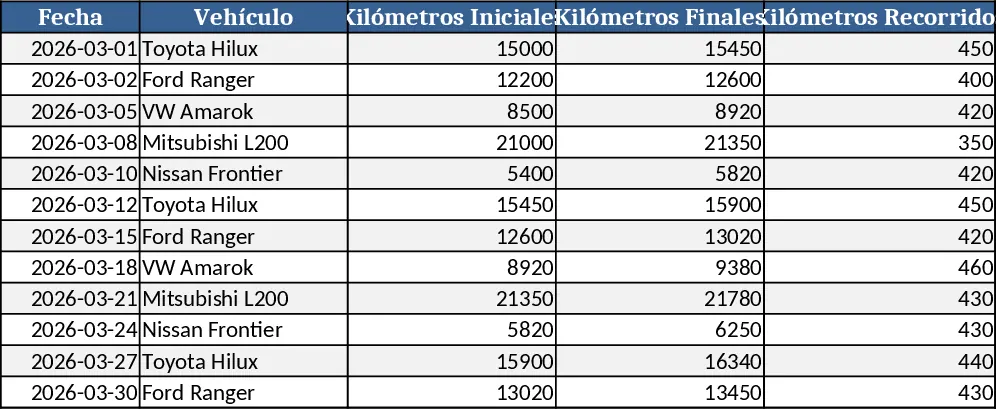

Consumo de Combustível Veículos e Equipamentos Modelo
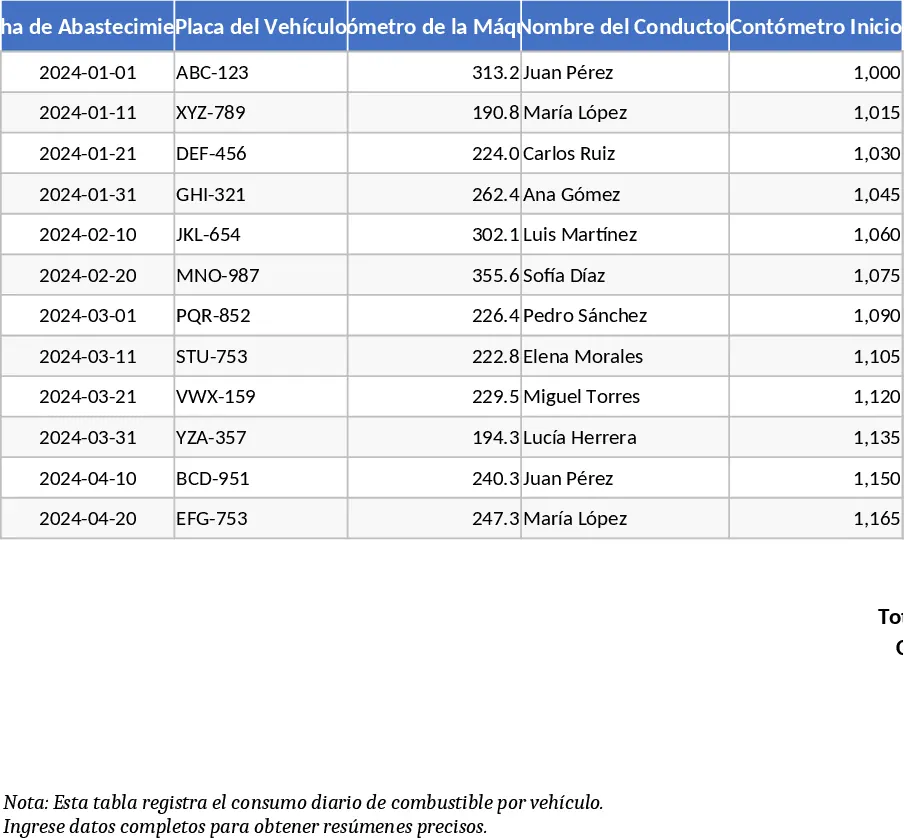
Effective fleet management begins with precise data, and fuel is often one of the largest variable costs for any business. This Macro-Enabled Fuel Consumption Tracker is specifically engineered to help operations managers and business owners gain full visibility into their fuel expenditures. The template is built around a robust data entry system that captures essential metrics such as start and end odometer readings, machine hour meters for heavy equipment, vehicle license plates, and driver names. By recording the specific date and the exact start and end times of each refueling session, you create a comprehensive log that accounts for every drop of fuel used in your daily operations.
The primary utility of this template lies in its ability to bridge the gap between fuel receipts and actual vehicle performance. Without a centralized tracking system, it is difficult to spot inefficiencies or unauthorized fuel usage. This tool solves that problem by providing a structured format where data is validated and organized automatically. You can easily track the performance of individual vehicles or machines, comparing their fuel consumption against industry standards or historical averages. This level of detail is invaluable for identifying maintenance needs, as a sudden spike in fuel consumption often signals mechanical issues that require attention. Beyond just tracking, the template serves as a historical archive, allowing you to look back at months or years of data to see how your fleet's efficiency has evolved over time.
This template is an ideal solution for logistics companies, construction firms, and any business that operates a fleet of vehicles or heavy machinery. It helps fleet coordinators maintain accountability among drivers and operators by linking every refueling event to a specific individual and time slot. The inclusion of both odometer and hour meter fields makes it versatile enough to handle both road vehicles and stationary equipment like generators or excavators. By centralizing this information, you can generate accurate reports for tax purposes, internal audits, and budget forecasting without having to sift through piles of paper logs. It is particularly useful for small to medium enterprises that need a professional-grade tracking system without the high cost of specialized fleet management software.
The structure of the workbook is designed for ease of use. It typically includes a main data entry sheet where the macro-enabled form resides, a database sheet that stores all historical records, and a dashboard sheet that visualizes the key performance indicators. The key fields are strategically placed to ensure that the user follows a logical flow when inputting data, starting from the vehicle identification and ending with the final meter readings. Dropdown menus are utilized wherever possible to minimize typing and prevent spelling variations that could compromise your data analysis later on.
How to use this template:
- Begin by navigating to the Settings or Master Data sheet to input your list of vehicles, machines, and authorized drivers. This ensures that your dropdown menus are ready for quick and accurate data entry and maintains data integrity across the entire workbook.
- During each refueling event, enter the required details into the main log or the macro-enabled input form. This includes the initial and final odometer or hour meter readings, the vehicle plate, and the driver's name. Be sure to record the precise start and end times to track refueling duration and identify any operational bottlenecks.
- Use the built-in macro buttons to save the entry and refresh the summary calculations. This action will automatically move the data to the historical database and update your consumption metrics, such as liters per kilometer or fuel cost per hour.
- Periodically review the summary dashboard to analyze trends. Look for patterns such as which vehicles are the most expensive to operate, which drivers consistently achieve better fuel economy, or if there are discrepancies between fuel purchased and fuel logged.
By adopting this automated tracking system, you can expect to save hours of manual data consolidation each week and significantly reduce the effort required to prepare monthly expense reports. The streamlined workflow reduces the likelihood of human error and provides a professional, organized approach to resource management. Ultimately, this template empowers you to make data-driven decisions that lower operational costs, improve driver accountability, and enhance the overall efficiency of your business fleet.
Recomendação de modelos semelhantes
Painel de Quilometragem e Combustível Modelo
Acompanhe a quilometragem dos veículos e os gastos com combustível, visualizando tendências de consumo e eficiência por meio de gráficos e tabelas de dados automatizados.
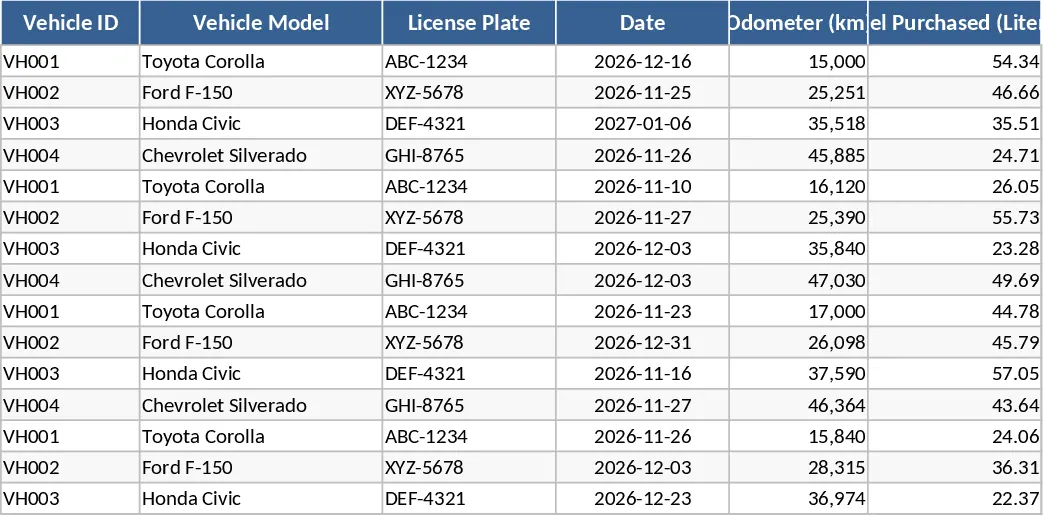
Modelo de Consumo Veicular Modelo
Acompanhe as compras de combustível e a quilometragem de cada veículo, calcule km por litro e os totais mensais de combustível e distância.