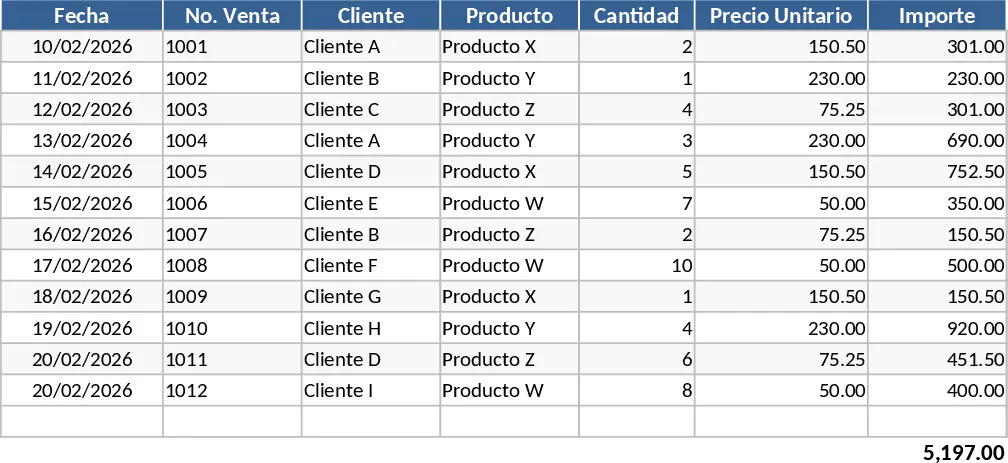

Annual Ice Cream Sales and Inventory Management Template
Managing an ice cream business requires precision, especially when dealing with seasonal fluctuations and perishable inventory. This Annual Ice Cream Sales and Stock Control template provides a structured environment to log every transaction and monitor your freezer levels with ease. The workbook is organized into twelve individual monthly sheets, allowing for a clean transition between seasons, and a master summary sheet that aggregates your data into actionable insights. Each monthly log captures essential data points such as the date, day of the week, product type, and quantities sold. Because the template includes automated formulas for total revenue, cost of goods sold, and gross profit, you spend less time on a calculator and more time serving customers.
The inventory management component is a standout feature, designed to solve the common headache of stockouts during heatwaves. By tracking initial stock, inflows from suppliers, and outflows from sales, the template calculates your real-time final stock. It even includes a section for recommended replenishment frequencies—weekly, bi-weekly, or monthly—to help you optimize your logistics. This ensures that you always have the right amount of vanilla, chocolate, or specialty flavors on hand without over-investing in stock that takes up valuable freezer space. This level of detail helps you identify trends, such as which days of the week generate the most traffic, allowing for better staff scheduling and promotion planning.
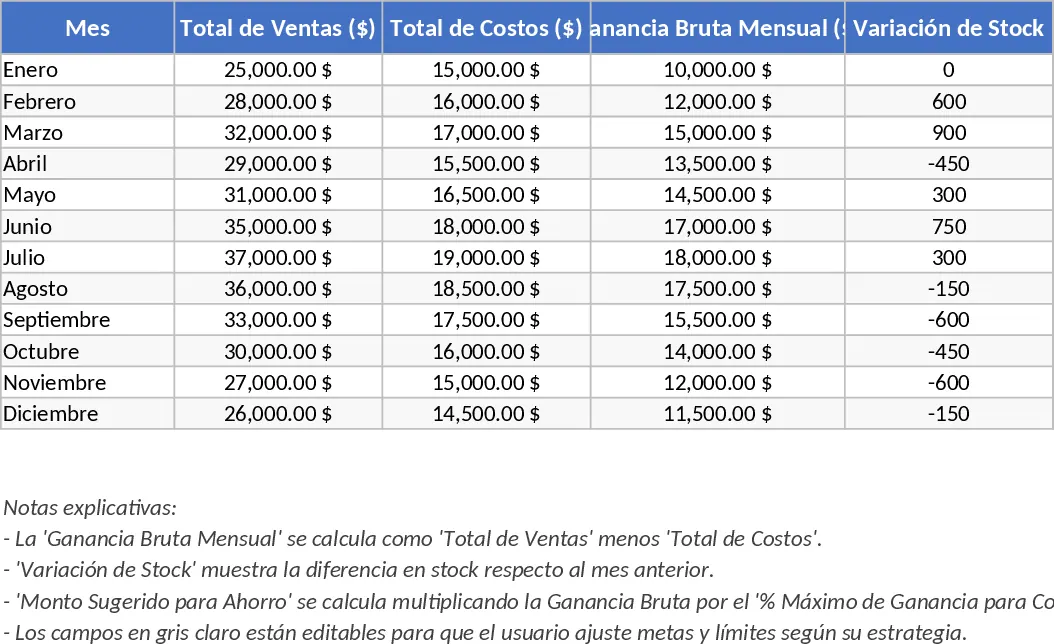
For long-term financial health, the Annual Summary sheet offers a bird's-eye view of your business performance. It consolidates monthly totals for sales and costs, highlighting your most profitable periods. A unique feature of this template is the savings advisor, which suggests a dollar amount to set aside for savings based on your profit margins. By defining your own minimum stock levels and maximum profit-to-savings percentages, you can build a financial cushion in a stable currency without decapitalizing your daily operations. This is particularly useful for small business owners looking to protect their earnings against local currency volatility while ensuring they have enough cash flow for the next month's inventory purchase.
How to use:
- Start by navigating to the current month and entering your product list, including unit costs and selling prices in the designated columns.
- Record your daily sales quantities as they happen; the template will automatically populate the revenue and profit fields based on your pre-set prices.
- Update the stock section whenever you receive a new shipment from your supplier to keep your inventory levels accurate and check the recommended restock frequency.
- At the end of the month, review the Annual Summary to adjust your savings goals and check if you are meeting your sales targets.
By implementing this system, you can expect significantly reduced administrative effort and a much clearer understanding of your profit margins. The template helps you identify which products are your top performers and ensures your inventory is always aligned with customer demand, leading to a more organized and profitable operation.
Similar Templates Recommendation
Stationery Store Business Management and Control Template
Efficiently manage your stationery store inventory, track daily sales transactions, and monitor supplier orders in one centralized dashboard.
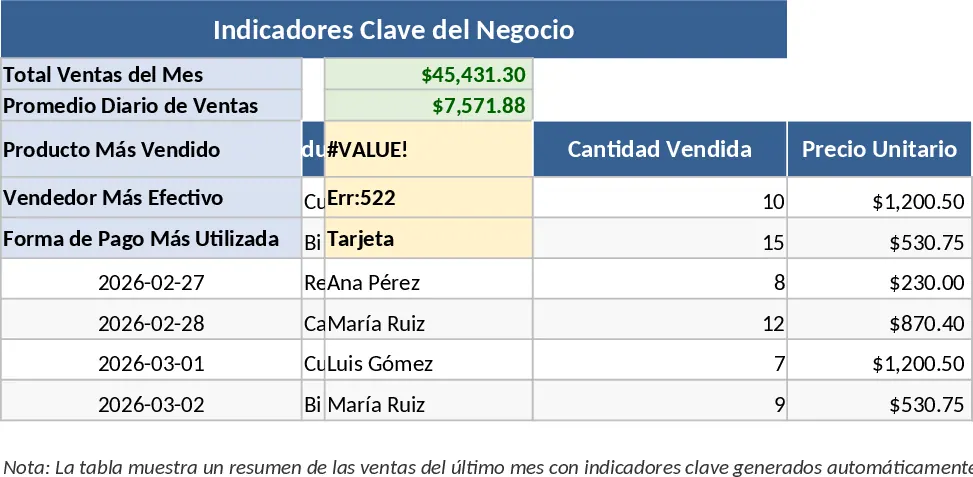
Arabic Retail Inventory and Cash Flow Management Template
Track inventory levels and manage daily sales and purchase transactions for your small business with this integrated Arabic-supported store system.
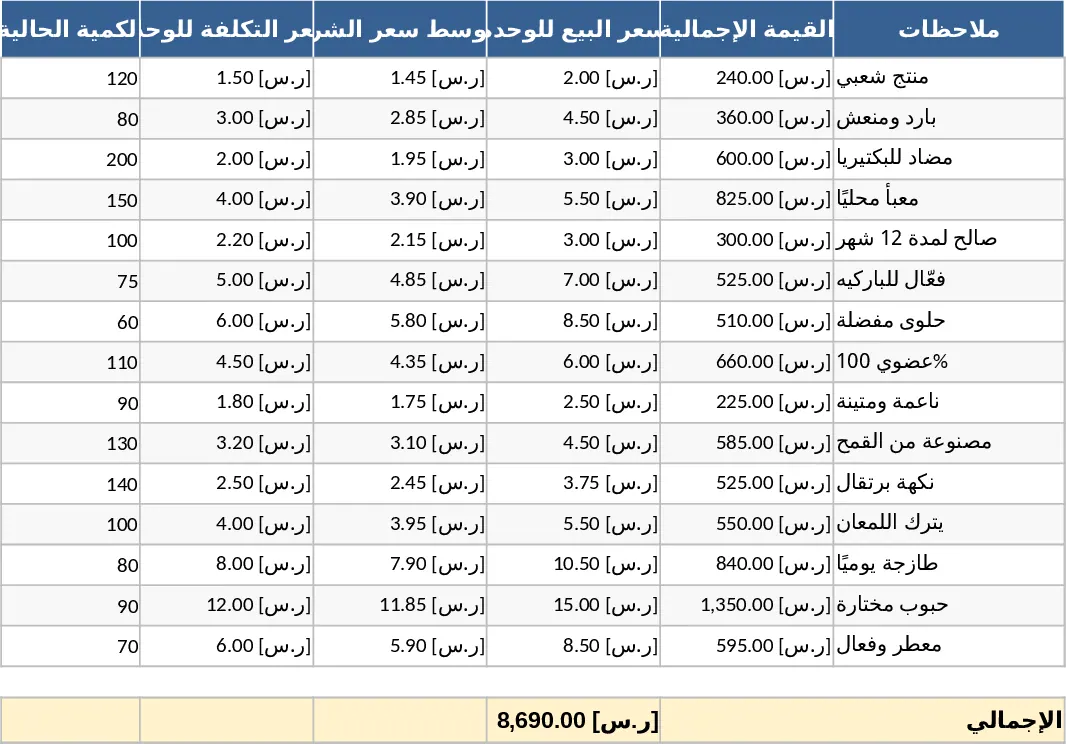
POS Sales Inventory and Accounts Receivable Template
Track retail sales, manage product inventory levels, and monitor customer accounts receivable in one integrated point-of-sale system.